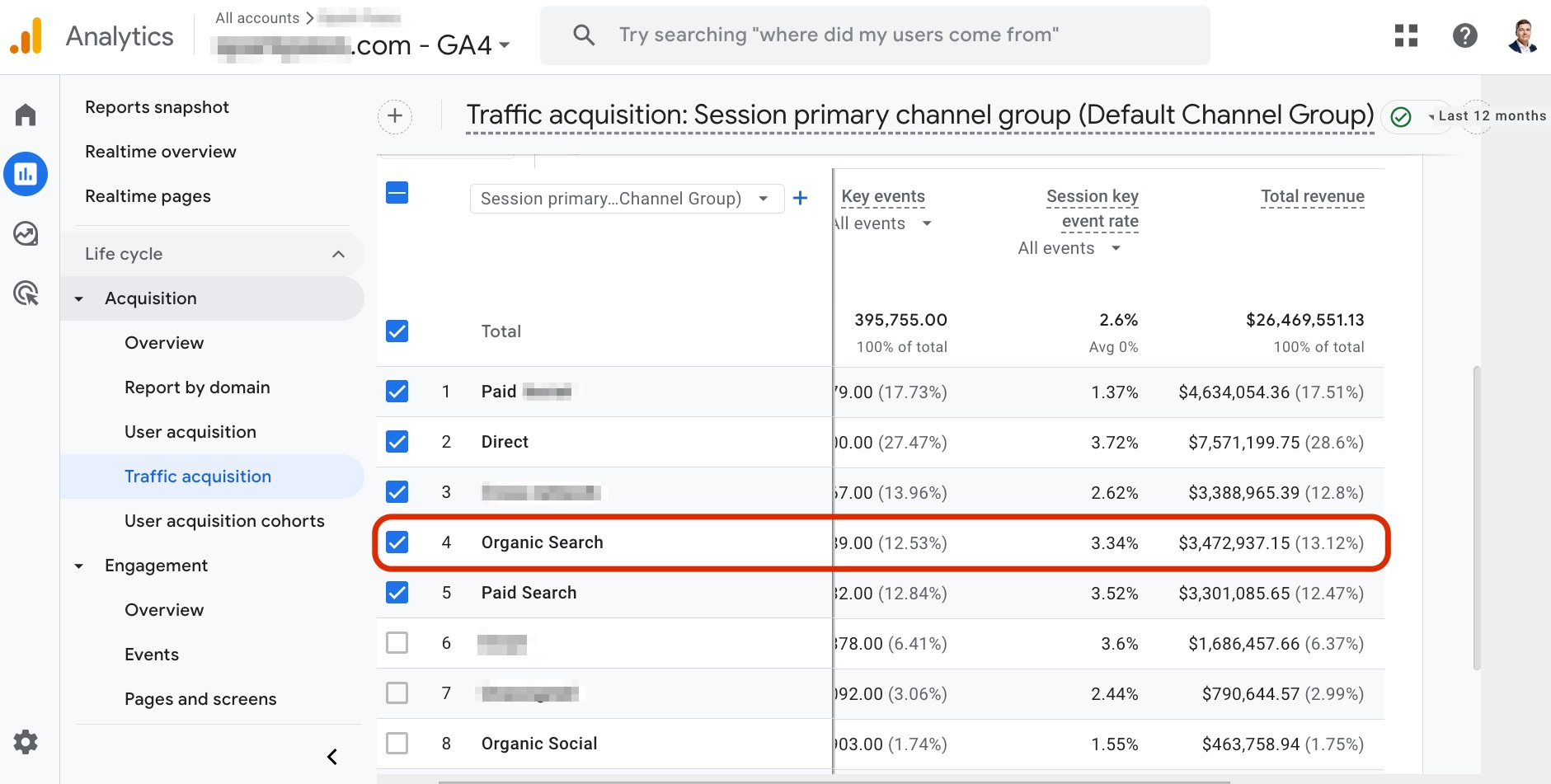
$3.47M a year from organic search, outranking Amazon on a Shopify store
▲︎ $3.47M/year from organic searchCurious what SEO and AI search could unlock for your store?
Get your free video audit →
The short version
- An established Shopify brand doing $26M a year in total revenue now earns $3.47M of that from organic search, up from almost nothing when we started in 2021.
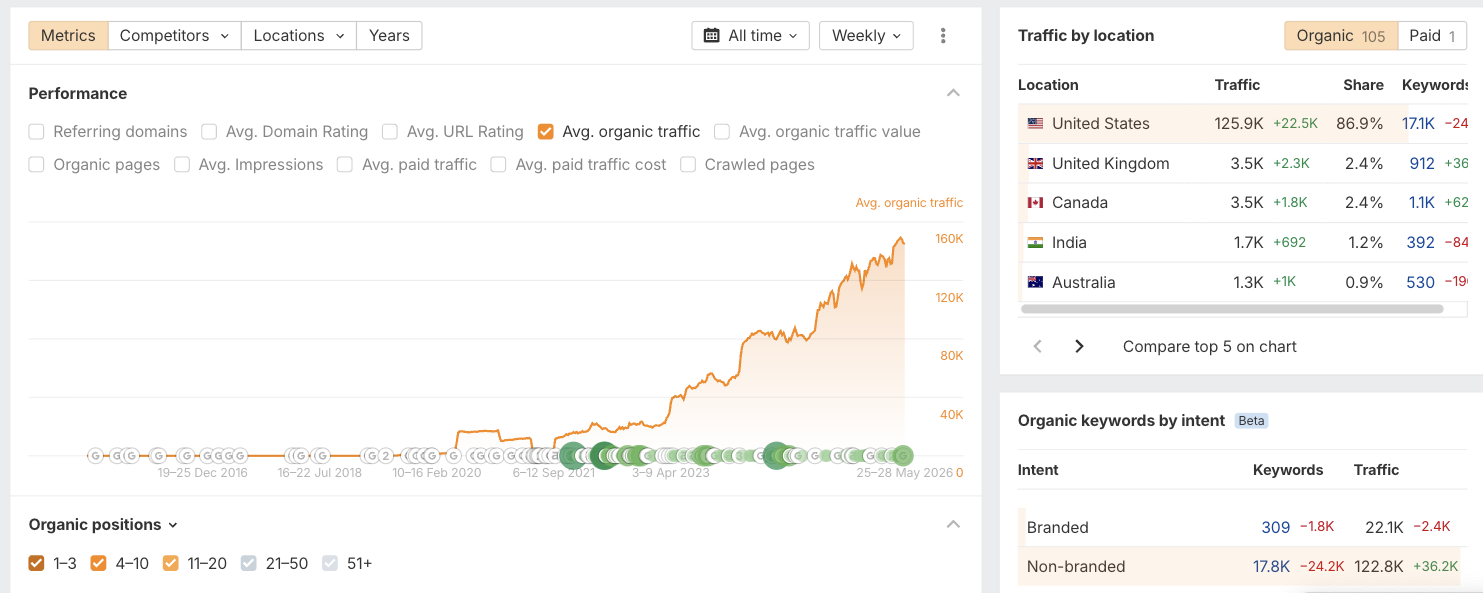
- They outrank Amazon and the biggest names in their niche for their most competitive terms, and 85% of that traffic is non-branded: people who had never heard of them.
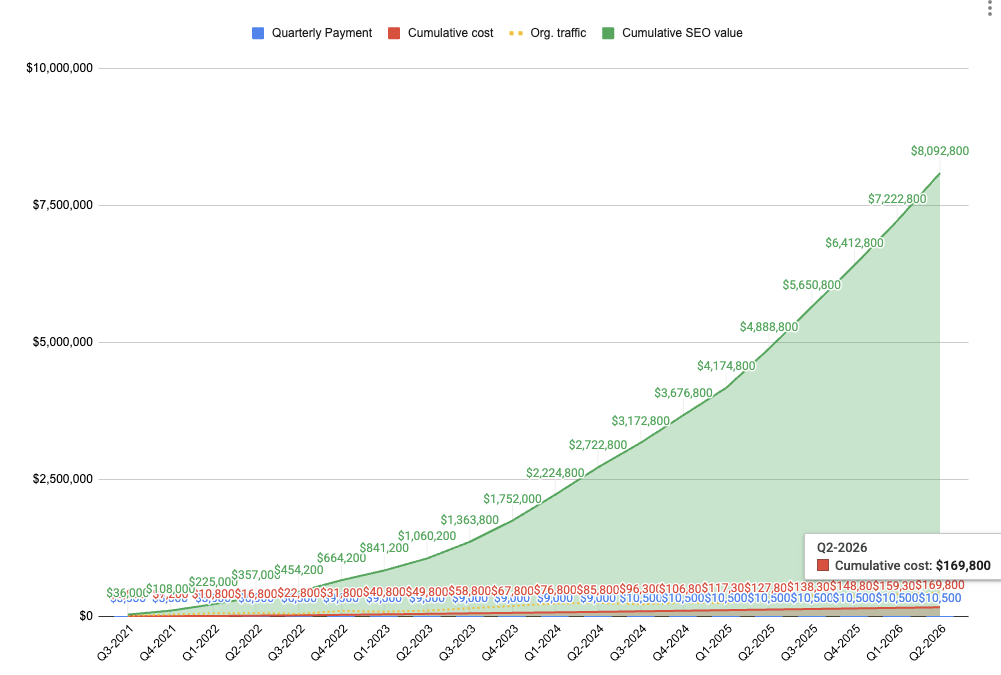
- On roughly $170,000 of SEO over five years, we’ve generated over $8M in organic revenue, and it’s still compounding.
Who they are
An established ecommerce brand on Shopify, in a large and competitive niche. When we started in 2021 they were ranking for almost nothing. Today the business does over $26M a year in total revenue, and about 13% of that, $3.47M, comes from organic search: a channel that barely existed for them before.
Step 1: is SEO even worth it here?
Before we take on any store, we run one analysis: is SEO actually a worthwhile channel for this brand, in this niche, at these product prices? We don’t want to waste your time, or ours, on months of work that was never going to pay off. There are so many stores where SEO is a genuine game-changer that we would rather focus on those and tell everyone else to invest their money elsewhere.
For this brand the answer was a clear yes. There was real search demand, the top competitors were making serious money from organic, and the numbers on both revenue and company value made sense.
Step 2: diagnose the one gap that matters
The most important part of any campaign is the strategy audit. We put 5 to 10 hours into working out the exact steps to move a store from where it is to the top, by studying who is already winning and why. That shows us where the gaps are and how to spend the budget.
For this brand the picture was clear. The biggest players ranked because they had dedicated, well-optimised pages for the most-searched keywords, backed by a lot of authority (backlinks). Technical SEO was a minor factor, about 1% of the work: fix what’s broken, then check quarterly. The real leverage, over 85% of the effort, was authority.
What we did
Optimised the most important category pages. For most ecommerce stores the biggest win is the category (collection) pages. We identified their highest-potential categories and optimised them properly to give them the best odds of ranking.
Created new category pages for quick wins. To prove ROI fast, so the client sticks with SEO long enough for it to compound, we found searches they were missing dedicated pages for, then built and optimised new category pages to capture that demand. These low-competition, real-demand pages brought early results and funded the harder work.
Fixed the site structure. We made sure their most important categories sat in the main navigation and on the homepage, the strongest page on any site, which makes those categories much easier to rank.
Built authority straight to the category pages. This is where 85% of the work went, and it’s the part that beats Amazon. To outrank a giant like Amazon you don’t build links to your homepage; you’d need tens or hundreds of millions in authority to compete there. Instead, we built high-quality backlinks directly to the specific category pages we wanted to rank. It’s far easier to beat Amazon on a single category page than across a whole domain. That is how a brand almost no one had heard of started outranking Amazon, and other household US names, for competitive terms.
Fixed the seasonality. Their business was seasonal, so we also researched and helped them rank new products with year-round demand, smoothing out the peaks and troughs.
The results
Organic traffic grew from near zero to over 150,000 visitors a month, and 85% of it is non-branded: people who had never heard of the brand before finding them in search. Organic now drives $3.47M a year in revenue, part of a $26M business. Over the roughly five years we’ve worked together, that’s more than $8M in cumulative organic revenue against about $170,000 invested. And they are still with us.
We also look at what this does to company value, because a store with a consistent, growing organic channel is worth more and easier to sell. On conservative multiples, we estimate the enterprise value added from the organic work at over $7.3M. Add the gross profit from the organic revenue and the total value generated is over $11M.
Why it keeps paying
Stop paying for ads and the traffic stops that day. SEO is the opposite. The downside is that it takes time, usually five to six months for a newer store to see real movement. But once the work is done it keeps returning value long after you stop. Even if this client stopped investing today, based on what we consistently see, the results would keep growing for around six months, hold, and only then slowly decline. The ROI compounds.
The biggest lessons
- Diagnose the one gap that matters. Don’t try to “do everything.” People say SEO means doing everything, but if Amazon is your competitor, everything would take 30 years and $30 billion. Find the biggest gaps and the lowest-hanging fruit, and compound from there.
- Category pages, plus links to them, are where the money hides. For most stores the biggest, most winnable money is in optimising the high-demand category pages and building authority straight to them.
- SEO compounds, but only for brands that don’t quit. Most stores pull the plug at month four or five, before results kick in. The biggest wins go to the ones who commit. If you’re thinking three to five years ahead, toward an exit, SEO done right is one of the best investments you can make.
- You can beat much bigger competitors with strategy and focus. This brand outranked Amazon and names you would recognise instantly. And it all started with one simple question: is SEO even worth it for this store?
Want to see what's realistic for your store, before you commit a penny?
Request your free audit →